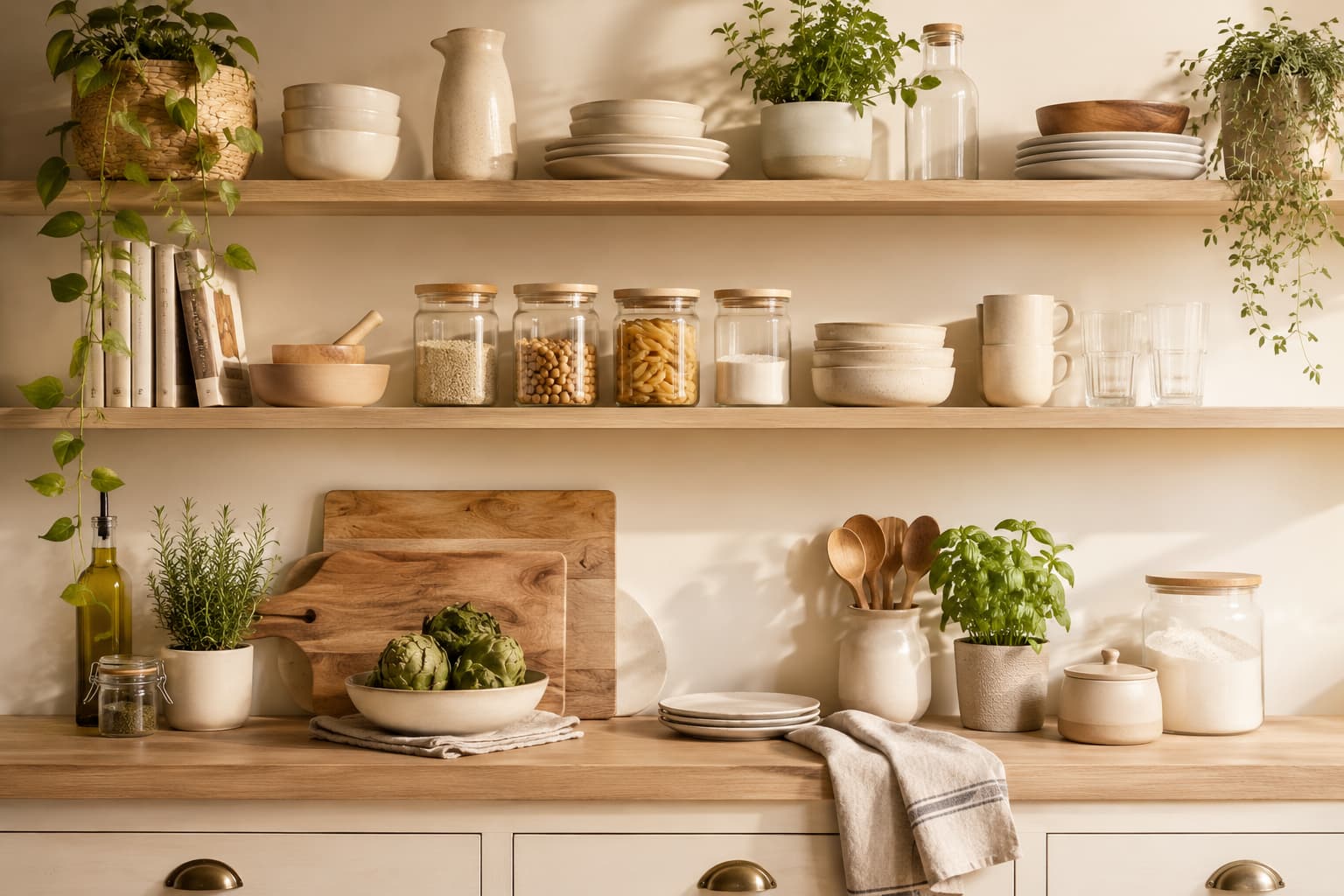
Kitchen Cabinet Organization can make a small kitchen feel more generous without adding square footage. Cabinets hide clutter, but they also hide problems. A deep shelf can swallow spices. A crowded lower cabinet can make pans difficult to reach. A messy food cabinet can lead to expired ingredients and duplicate purchases. The solution begins with zones, not products. Each cabinet should support a clear task. Cooking, baking, serving, cleaning, and food storage all need defined homes. Clever Small Kitchen Storage Hacks Checklist helps organize those decisions. A practical plan turns confusing cabinets into useful storage.
Kitchen Cabinet Organization changes the whole room because cabinets shape every kitchen routine. You open them while cooking. You open them while unloading groceries. You open them while setting the table. When cabinets feel chaotic, the entire kitchen feels harder to manage. Good organization reduces searching. It also reduces frustration during busy moments. You can see what you own. You can reach what you need. A thoughtful kitchen decluttering checklist helps clear the first layer of confusion. Once extra items leave, better storage becomes much easier to design.
Kitchen Cabinet Organization works best when you begin with a full reset. Empty one cabinet at a time. Sort items by category. Check for duplicates, broken tools, expired food, and pieces missing lids. Keep the process small enough to finish. One cabinet completed well is better than every cabinet half-finished. Wipe shelves before replacing items. Place the most useful things back first. This prevents rarely used items from claiming prime space. A clear printable organization guide keeps the reset orderly. It also helps you avoid pulling apart the whole kitchen at once.
Zones should reflect how your household actually uses the kitchen. Store cooking oils, pans, and seasonings near the stove. Keep plates, bowls, and glasses near the dishwasher or serving area. Place baking supplies together if you bake often. Keep lunch containers near wraps, bags, or snack items. Put coffee mugs near coffee supplies. These small decisions save repeated steps. They also make it easier for everyone to return items. Meal prep zones can be especially helpful in compact kitchens. A cabinet should not simply store objects. It should support a routine.
Kitchen Cabinet Organization improves quickly when vertical space stops going unused. Shelf risers help stack plates, bowls, mugs, or cans neatly. Clear bins keep packets, snacks, and small baking items contained. Turntables help in awkward corners. Pull-out baskets can make lower cabinets easier to reach. Door racks can hold wraps, spices, or cleaning supplies. Choose organizers only after measuring carefully. An almost-right product can waste space. Cabinet shelf risers are often a strong first upgrade because they add usable levels without permanent changes.
Deep cabinets need special attention. Items in the back often disappear. Use bins that pull forward like drawers. Store less-used pieces behind daily items only when they are clearly grouped. Label containers if the shelf holds similar products. Avoid stacking heavy pans too high. Place lids vertically when possible. A simple rack can prevent a noisy pile. Deep lower cabinets may need pull-out systems or large baskets. Compact kitchen storage should make hidden space accessible. Storage is only useful when you can reach it without unloading everything first.
Kitchen Cabinet Organization becomes even more important when cabinets serve as a pantry. Group food by meal type or category. Keep breakfast items together. Store pasta, grains, and sauces in one zone. Place baking items in a bin or dedicated shelf. Use older items first. Keep snacks visible so boxes do not multiply. Containers can help, but do not decant everything unless it truly supports your habits. A clear small pantry organization system reduces food waste and grocery confusion. It also makes compact kitchens feel better stocked and less crowded.
The under-sink cabinet often becomes a cluttered catchall. Start by removing old sponges, duplicate cleaners, and unused products. Use a waterproof liner if leaks are a concern. Add a bin for cleaning sprays. Keep dishwasher tabs in a sealed container. Store trash bags on a roll holder or in a narrow bin. Leave space around pipes so nothing gets crushed. A small caddy can hold daily cleaning tools. Under-sink organizers make this awkward cabinet safer and easier to maintain. A tidy cleaning zone supports the whole kitchen.
Cabinet doors and exposed sides can provide useful storage when treated carefully. A door rack can hold spices, lids, cutting boards, or wraps. Magnetic strips can hold lightweight metal tools. Hooks can hold towels or measuring spoons. Side panels can support narrow shelves when the layout allows. The goal is function without visual clutter. Avoid covering every open surface. Keep visible storage consistent in material and color. Vertical kitchen storage works best when it solves a clear problem. It should make the kitchen calmer, not busier.
Maintenance should feel simple enough to repeat. Return groceries to zones immediately. Check one cabinet each week. Remove expired food before shopping. Keep extra containers from multiplying. Avoid buying organizers until a real need appears. Teach everyone in the home where common items belong. A cabinet system should be easy to understand at a glance. For the full series, connect this guide with small kitchen storage planning and tiny kitchen organization habits. Add space-saving kitchen hacks, countertop clutter solutions, drawer dividers, and magnetic spice storage as needed. Clever Small Kitchen Storage Hacks Checklist helps keep cabinet decisions practical.


Leave a comment