Vietnamese Noodle Soups offer the kind of meal that feels both comforting and bright. The broth warms the table. The noodles make the bowl satisfying. Herbs, lime, sprouts, chili, and sauces keep every bite lively. These soups can feel simple or layered, depending on the recipe and time available. Pho may be the best-known example, but it is only one direction. Many bowls use different broths, noodles, proteins, and toppings. Planning helps because the serving experience has several moving parts. Simple Checklist for Successful Vegetable Fermentation highlights how useful step-by-step kitchen structure can be. That structure translates well to noodle soup preparation.
Vietnamese Noodle Soups satisfy because they combine contrast. Hot broth meets fresh herbs. Soft noodles meet crunchy sprouts. Rich stock meets bright lime. Savory seasoning meets fragrant aromatics. This contrast keeps the bowl interesting from start to finish. The meal also feels adjustable. Each person can add heat, herbs, sauce, or acid at the table. That makes the same pot work for different tastes. A practical home cooking checklist keeps those finishing pieces ready. The final bowl feels better when nothing is forgotten.
Vietnamese Noodle Soups vary widely in character. Pho feels aromatic and soothing. Bun bo Hue feels bold and spicy. Hu tieu can feel clear, savory, and flexible. Chicken noodle soups can feel gentle and family-friendly. Vegetable versions can feel light and fresh. Choose a soup by the mood you want. A rainy day may call for deeper broth. A warm evening may suit lighter noodles and herbs. Time also matters. Some broths reward long simmering. Others can be streamlined. A Vietnamese noodle soup guide helps match flavor, time, and ingredients before cooking begins.
Vietnamese Noodle Soups depend on broth that tastes complete before serving. Aromatics bring the first layer. Bones, vegetables, or seafood can add body. Spices contribute warmth. Fish sauce, salt, sugar, and acid shape the final balance. Taste the broth before adding noodles. It should feel slightly stronger than a sipping broth because noodles and toppings will soften the flavor. Simmer gently when clarity matters. Skim when needed. Add delicate aromatics later if they fade quickly. Aromatic broth planning gives this stage a clear rhythm. Better broth makes every topping more useful.
Noodles create the body of the bowl. Thin rice noodles feel light. Flat rice noodles feel silky. Thicker round noodles give more chew. Cook noodles separately whenever possible. This keeps broth clean and prevents overcooking. Rinse noodles when needed so they do not clump. Portion them into bowls before ladling broth. Keep extra noodles separate if you expect leftovers. A soup should not become a swollen noodle pot by the next day. Rice noodle cooking tips can protect texture. Good noodles help the bowl feel composed and fresh.
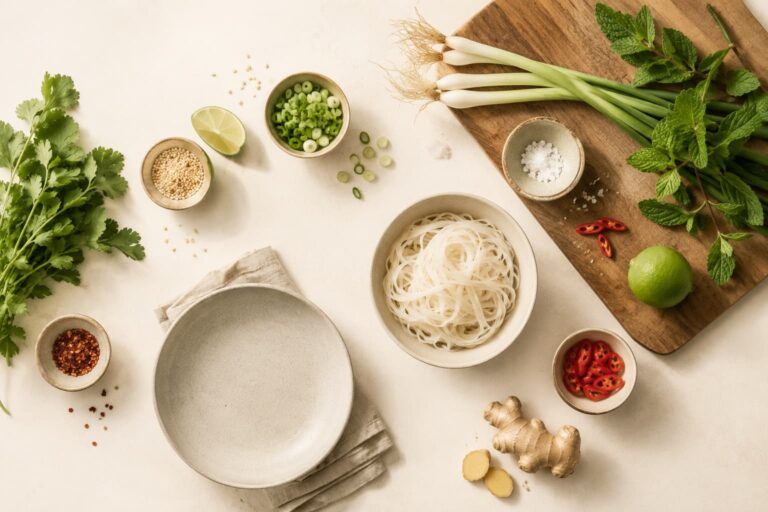
Vietnamese Noodle Soups become vivid through garnishes. Herbs should feel fresh and abundant. Lime wedges should be ready. Bean sprouts should be crisp. Sliced chili should be optional but available. Fried shallots can add crunch. Scallions add sharpness. Thin onion slices can soften slightly under hot broth. Arrange garnishes before serving so the meal feels relaxed. Keep sauces nearby, but let the broth speak first. A fresh herb prep routine makes the table more inviting. Garnishes are not afterthoughts. They complete the flavor balance.
Vietnamese Noodle Soups can work on weeknights with planned shortcuts. Make broth ahead and refrigerate or freeze portions. Wash herbs earlier. Keep noodles stocked in the pantry. Use leftover proteins when appropriate. Choose fewer toppings when time is short. A bowl with good broth, noodles, lime, herbs, and one protein can still feel complete. Avoid making the weeknight version too ambitious. A simple meal cooked calmly often tastes better than a complicated one cooked under pressure. A simple soup prep checklist helps keep that balance realistic. Structure makes flavor easier to repeat.
Serving shapes the whole experience. Choose bowls large enough for broth, noodles, and toppings. Add noodles first. Arrange meat, tofu, vegetables, or mushrooms neatly. Ladle broth while it is very hot. Place herbs and lime on the side. Keep sauces in small dishes instead of pouring everything into the pot. This gives guests control. It also keeps leftovers cleaner. A finished bowl should look generous but not crowded. Soup garnish ideas help make the table feel thoughtful. A beautiful bowl starts with practical arrangement.
Leftovers need separation. Store broth by itself. Keep noodles in a separate container. Store herbs, sprouts, and lime separately when possible. Reheat broth gently until hot. Refresh noodles with warm water if needed. Add delicate toppings only at serving. This keeps the second bowl from feeling tired. Broth may taste even better the next day. Noodles, however, need protection. A little planning makes leftovers more enjoyable. Pho meal prep habits work well for many Vietnamese soups. Separate storage preserves the work you already did.
Vietnamese Noodle Soups become easier through repetition. Start with one recipe and learn its structure. Notice the broth, noodle, herb, and garnish pattern. Change one thing at a time. Try a different noodle. Adjust the herb mix. Build a faster broth. Add more heat. Keep notes after each attempt. For more guidance, connect this article with Vietnamese soup recipes, homemade pho planning, and easy broth tips. Use broth seasoning tips, Vietnamese comfort food, homemade soup bowls, and pho toppings guide as you refine future meals. Simple Checklist for Successful Vegetable Fermentation keeps the broader cooking process organized.

Leave a comment